
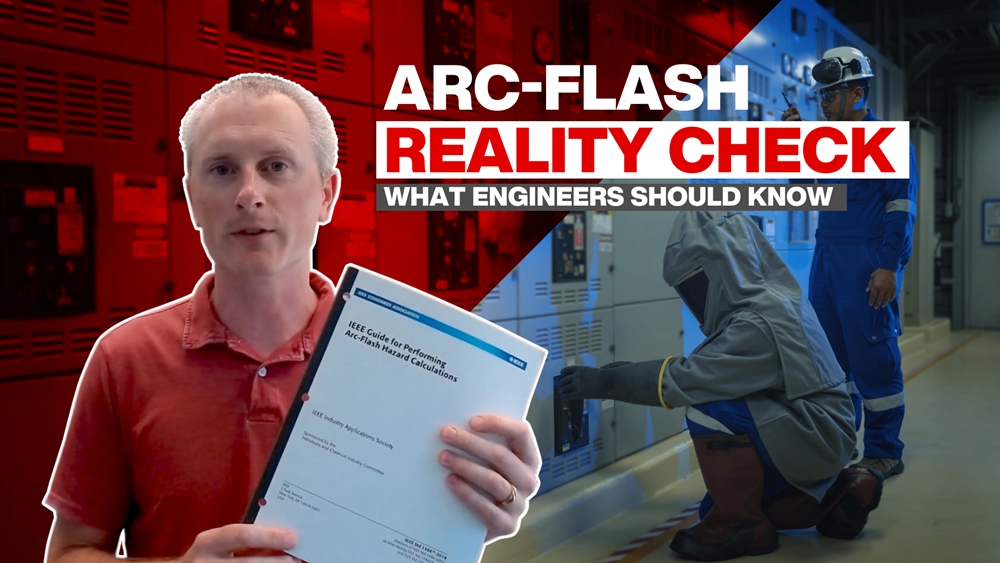
Welcome to another in the Electrical Building Design Show series. In this episode, your host David Robison demystifies arc-flash calculations, an important topic in advanced electrical design and something that’s now being requested earlier in the design process.
Topics presented include:
- Arc-Flash History: Introduced theoretically in 1982, arc-flash calculations were traditionally performed later in the design, but they’re now trending earlier. The origins of modern calculations show the evolution of the current practical methods.
- IEEE 1584 Standards: These standards, although not widely read, are what separates arc-flash from other engineering calculations. Throughout their existence, they’ve become enhanced by increased testing that significantly improves accuracy.
- Protection: Although not as precise as other engineering calculations, arc-flash primarily aims to prevent second-degree burns. The Arc-Flash Protection Boundary and necessary protective gear are important to understand.
The Bottom Line:
Arc-flash calculations are necessary for electrical system safety, but while they have limitations, they are essential for preventing burns. Using arc-flash calculators is key, and understanding these restrictions ensures effective protection.
In this video below, we simplify arc-flash calculations and offer insights into their history, purpose, and intricacies. It’s our hope that more information allows for better safeguards for both electrical engineers and workers.